Treating a healthy or moderately infested ash tree with emamectin benzoate injection typically costs somewhere between $150 and $400 per application, repeated roughly every two years. Removing that same tree, once, typically costs between $300 and $2,000 depending on size, plus $75 to $300 for stump grinding. For a tree in good condition, treatment is usually the better long-term financial decision. For a tree that’s already lost more than half its canopy, removal is usually the more financially sound choice, since treatment success rates drop sharply once a tree is heavily infested.
The right answer depends less on which number looks smaller on paper and more on the specific tree in question: its size, its condition, its location, and how many treatment cycles you’re actually likely to need.
Key Takeaways
- Trunk injection treatment commonly runs $12 to $12.50 per inch of trunk diameter per two-year cycle, so a 20-inch tree costs roughly $240 to $250 every two years.
- Full removal typically costs $200 to $2,000 depending on tree size and location, with stump grinding usually an additional $75 to $300.
- Treatment is most cost-effective, and most likely to succeed, on trees that are healthy or only lightly infested. Success rates drop substantially once a tree is already heavily infested.
- Over a 10-year period, treating a healthy, moderately sized ash tree is often cheaper in total than one round of removal plus stump grinding plus a replacement tree, though this depends heavily on tree size and treatment interval.
- Removing a mature tree carries hidden costs that don’t show up on a removal invoice: lost shade, higher summer energy bills, and lower property value compared to a lot with mature trees.
- The financial case for treatment weakens quickly as canopy damage increases, since a heavily declined tree may not recover even after you’ve paid for treatment.
How Treatment Cost Actually Works
Professional emamectin benzoate injection pricing is generally calculated by trunk diameter at breast height, or DBH, because dosage scales directly with tree size. A commonly cited benchmark runs around $12 to $12.50 per inch of DBH for a standard two-year treatment cycle.
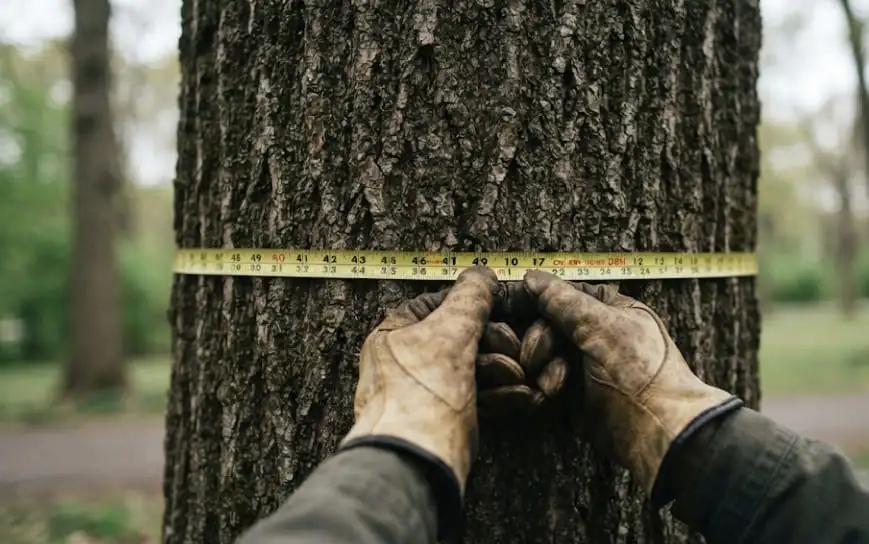
What that looks like in practice:
| Tree diameter (DBH) | Approximate cost per 2-year cycle |
| 10 inches | $120 to $150 |
| 14 inches | $150 to $220 |
| 20 inches | $240 to $250 |
| 26+ inches (large mature tree) | $300 to $400+ |
Several factors push these numbers up or down for a specific property:
- Access. A tree behind a fence, retaining wall, pool, or narrow gate takes more time to reach and treat, which increases labor cost.
- Number of trees. Treating several ash trees on one property is generally more cost-efficient per tree than treating a single tree.
- Tree size and required method. Trees under about 15 inches DBH may qualify for a cheaper homeowner-applied soil drench, running roughly $20 to $50 per year in DIY form. Trees larger than that generally need professional trunk injection, since soil drench treatments have been shown to struggle at protecting bigger trees.
It’s worth being direct about something a lot of cost pages gloss over: soil drench is cheaper, but it’s not simply a budget version of trunk injection. It’s a different tool suited to a different size and risk profile of tree, and using it on a large or high-value tree isn’t a reliable cost-saving strategy.
How Removal Cost Actually Works
Removal cost also scales with tree size, but the cost drivers are different, mostly access, height, and proximity to structures rather than trunk diameter alone.
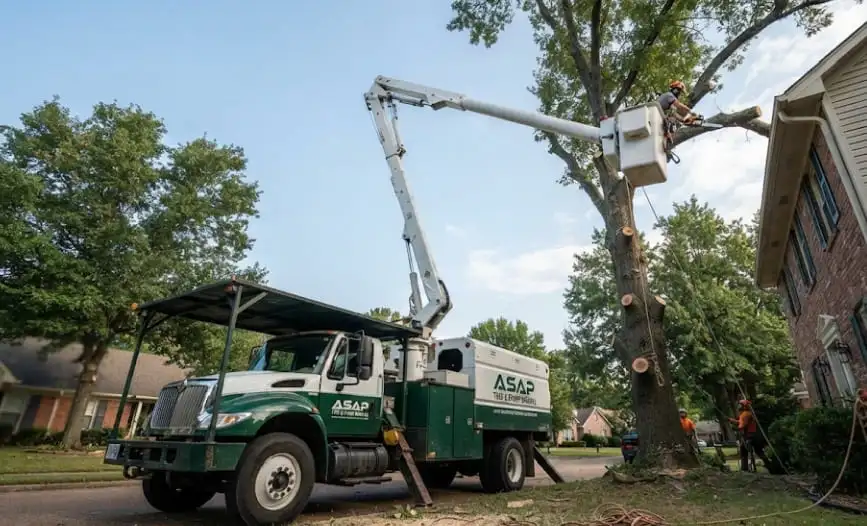
| Tree size / condition | Approximate removal cost |
| Small to medium ash tree | $300 to $1,000 |
| Large mature ash tree | $1,000 to $2,000+ |
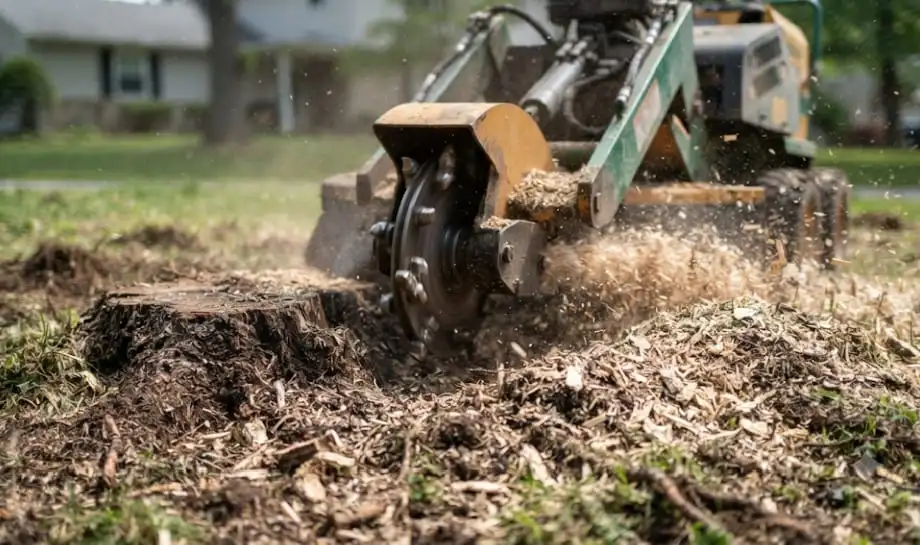
| Stump grinding (separate line item) | $75 to $300 |
| Emergency removal (storm-damaged, leaning, near structure) | Often the higher end of the range or above, due to urgency and complexity |
A few things to know that most cost pages skip:
- Stump grinding is almost always separate. A removal quote that doesn’t mention the stump specifically is probably not including it.
- Dead ash trees can cost more to remove than declining ones, not less. A tree that’s been dead for a while becomes brittle and structurally unpredictable, which increases the complexity and risk of the removal job.
- Location matters more for removal cost than for treatment cost. A tree near power lines, a roofline, or a fence adds complexity that a straightforward open-yard removal doesn’t have.
Treatment vs. Removal: Direct Comparison
| Factor | Treatment | Removal |
| Upfront cost | Lower per application ($120 to $400+) | Higher per event ($300 to $2,000+) |
| Recurring cost | Yes, roughly every 2 years for the life of the tree | No, one-time cost (plus stump grinding) |
| Best suited for | Healthy to moderately infested trees (under about 50% canopy loss) | Heavily infested trees (over about 50% canopy loss), dead trees, structurally unsafe trees |
| Success likelihood | High on healthy/light infestation, uncertain to poor on advanced infestation | N/A, removal is a guaranteed outcome regardless of tree condition |
| Ongoing commitment | Requires continued treatment indefinitely to maintain protection | None after removal is complete |
| What you keep | Mature canopy, shade, existing property value contribution | A cleared space, requiring a new tree to rebuild any of those benefits |
5-Year Cost Comparison
Using a representative 20-inch ash tree in reasonably good condition:
Treatment path: Two treatment cycles over 5 years (roughly years 1 and 3) at $240 to $250 each = $480 to $500 total
Removal path: One removal at $1,000 to $1,500 (mid-size mature tree) + stump grinding at $150 to $250 + a replacement tree (variable, often $150 to $600 for a reasonably sized nursery tree, plus planting) = $1,300 to $2,350 total, before accounting for the years it takes a new tree to provide meaningful shade or canopy value.
Over a 5-year window, treatment is very often the cheaper path for a tree that’s still a good treatment candidate.
10-Year Cost Comparison
Extending the same 20-inch tree scenario to a decade:
Treatment path: Roughly 5 treatment cycles at $240 to $250 each = $1,200 to $1,250 total
Removal path: Same one-time removal, stump grinding, and replacement cost as above (removal doesn’t repeat), so $1,300 to $2,350 total, but the replacement tree is still only 10 years into growth, nowhere near replicating the shade, canopy, or property value contribution the original mature tree already provided.
At the 10-year mark, straight dollar totals start to converge, but this is where the analysis needs to include what you’re actually getting for the money. Continued treatment keeps a mature, fully established tree providing shade and value the entire time. Removal resets that clock to zero and starts over with a young tree that won’t provide comparable benefits for years, often a decade or more, depending on species and growth rate.
The Value You’re Not Seeing on a Removal Invoice
A removal quote tells you what it costs to take a tree down. It doesn’t tell you what you’re giving up.
Energy costs. A mature tree properly positioned for shade has been shown to reduce a home’s energy bills by roughly 3 percent within five years of planting, growing to around 12 percent by year fifteen, according to Center for Urban Forest Research data. On the flip side, research using over a decade of utility billing data found that removing a mature tree increased a household’s average monthly energy consumption by about 3 percent across the year. An ash tree you remove today was likely already providing a meaningful chunk of that saved-energy benefit, and a new sapling won’t replicate it for a long time.
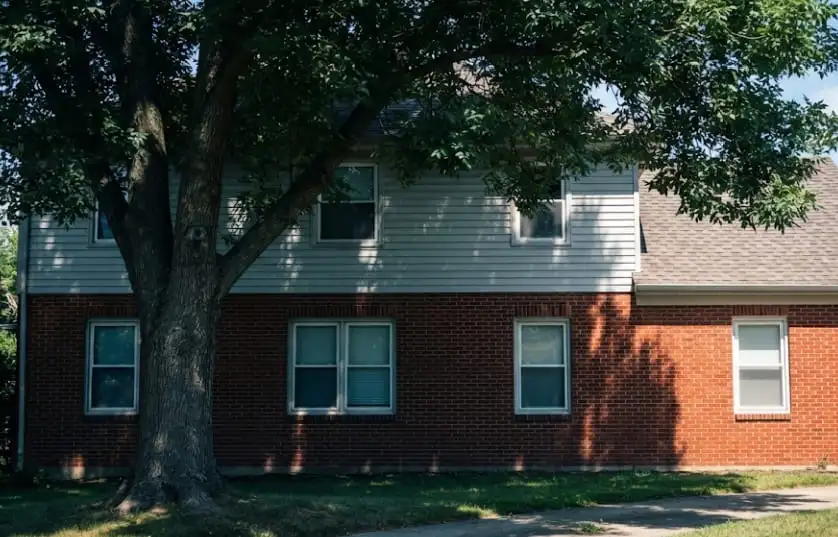
Property value. Research on residential property values has found that lots with substantial mature trees sell for around 18 percent more than comparable lots without them, with heavily wooded lots showing even larger premiums. A large, healthy ash tree in a front yard is doing real work for your property’s market value right now, work a freshly planted replacement can’t do for years.
Cooling effect. The USDA has noted that a single healthy shade tree can provide a cooling effect roughly equal to running ten room-sized air conditioners for 20 hours a day. That’s not a small thing to walk away from over a treatment cost that, on a healthy tree, is often a few hundred dollars every two years.
None of this means removal is the wrong call for every tree. It means the “removal is simpler and cheaper” framing that a lot of cost pages lean on is incomplete without factoring in what the tree was doing for the property before it came down.
When Treatment Makes Financial Sense
- Canopy thinning is under roughly 30 percent, and ideally hasn’t progressed past 50 percent.
- The tree is otherwise structurally healthy, with no major dead limbs or root issues unrelated to EAB.
- The tree is a mature, established specimen already providing meaningful shade, privacy, or curb appeal.
- The tree sits in a location where removal would also require significant new landscaping or hardscape repair.
- You’re comfortable committing to a recurring treatment schedule, roughly every two years, for as long as you want to keep the tree.
When Removal Is the Better Investment
- Canopy thinning has passed roughly 50 percent, where treatment success rates drop sharply.
- The tree already shows structural risk: extensive bark splitting, large dead limbs, or a lean toward a structure.
- The tree is already dead or nearly so, in which case no amount of treatment spending will reverse the outcome.
- The tree sits close enough to a home, driveway, or walkway that its declining structural integrity is a safety concern independent of the EAB question.
- You’re not interested in a recurring treatment cost and would rather absorb one larger cost now and be done with it.
A Real Homeowner Scenario
Consider a 22-inch DBH ash tree in a front yard, providing shade to the west side of the house, showing about 20 percent canopy thinning after a woodpecker-flagged inspection.
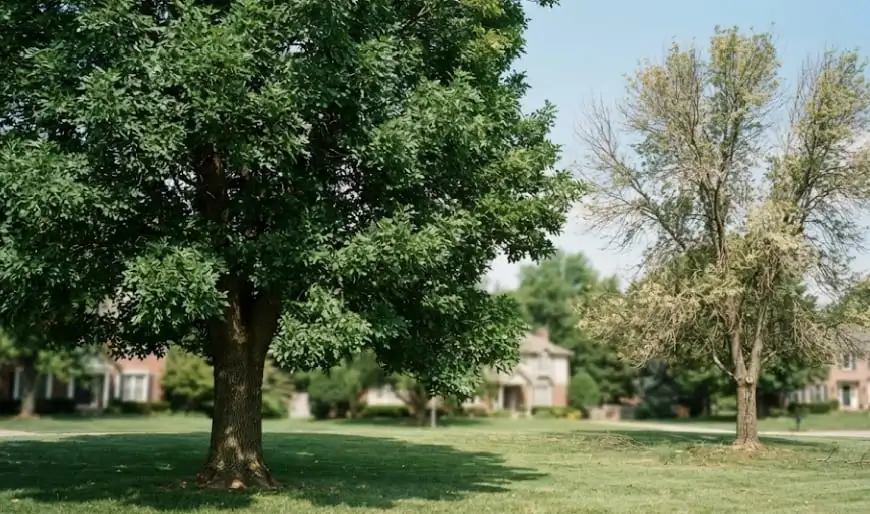
Treatment path: Roughly $260 to $270 per two-year injection cycle. Over 10 years, that’s about $1,300 to $1,350 across 5 cycles, and the tree keeps providing shade, cooling, and property value contribution the entire time.
Removal path: Removal in this size range likely runs $1,200 to $1,800, plus $150 to $250 for stump grinding, plus a replacement tree and planting cost, likely $1,600 to $2,300 all-in, and the new tree needs 10 to 15 years before it starts providing comparable shade and value.
At 20 percent canopy thinning, this tree is a strong treatment candidate on both biological and financial grounds. The math shifts meaningfully if that same tree were sitting at 55 percent canopy loss instead, where treatment success becomes uncertain enough that the removal path, despite the higher upfront number, becomes the more financially sound choice since a failed treatment cycle wastes money without preventing the eventual removal cost anyway.
Hidden Costs Homeowners Forget
- Multiple treatment cycles add up, but so does deferred removal. Don’t compare one treatment cycle against removal. Compare the realistic number of cycles you’d need against the removal cost, since either path spans years.
- Dead ash trees often cost more to remove, not less. Waiting until a tree is fully dead to decide on removal usually increases the removal bill due to brittleness and structural risk.
- Replacement tree costs and years of lost value. A removal invoice rarely includes the years a replacement tree needs to catch up to what was lost.
- Emergency removal premiums. A storm-damaged or suddenly failing tree costs more to remove urgently than one removed on a planned timeline.
- Stump grinding is routinely left off initial estimates. Confirm whether a removal quote includes it before comparing prices between providers.
Common Money-Wasting Mistakes
- Treating a tree that’s already past the point of likely recovery. Spending on injections for a tree at 60 or 70 percent canopy loss is a poor financial bet, since recovery odds are low regardless of cost.
- Using homeowner soil drench on a large tree. It’s cheaper, but it’s documented to struggle on trees over about 15 inches DBH, meaning the “savings” can turn into wasted money if the tree isn’t protected.
- Delaying a decision until the tree is dead. This forecloses the treatment option entirely and generally increases removal cost due to added risk and complexity.
- Comparing a single treatment cycle to a single removal cost. This understates treatment’s long-term total and overstates removal’s simplicity, since removal comes with its own follow-on costs.
- Ignoring canopy condition entirely when budgeting. The financial case for treatment is fundamentally different for a 15 percent thinned tree versus a 45 percent thinned tree, even though the sticker price of treatment looks the same either way.
Decision Checklist
- Estimate canopy thinning percentage. Under 30 percent strongly favors treatment. Over 50 percent strongly favors removal.
- Get the tree’s actual trunk diameter measured, since both treatment and removal costs scale with size.
- Calculate a realistic multi-year total for treatment, not just one cycle, based on how many years you’d want to keep the tree.
- Get a removal quote that explicitly includes stump grinding, since separate pricing can make removal look artificially cheaper at first glance.
- Factor in the tree’s current shade and property value contribution, especially for a large, well-placed mature tree, since that value doesn’t appear on either quote.
- Weigh structural safety independently of the cost comparison if the tree is near a home, driveway, or walkway.
Frequently Asked Questions
How much does emerald ash borer treatment cost?
Commonly $12 to $12.50 per inch of trunk diameter per two-year injection cycle, meaning a 20-inch tree runs roughly $240 to $250 per cycle. Total cost ranges widely by tree size, typically $100 to $400 per application.
How much does ash tree removal cost?
Generally $200 to $2,000 depending on tree size and complexity, with stump grinding usually an additional $75 to $300.
Is emerald ash borer treatment worth it?
For a healthy tree or one with less than about 30 to 50 percent canopy loss, yes, in most cases treatment costs less than removal over a 5 to 10 year window and keeps the tree’s shade and value intact. For a tree past that threshold, treatment success drops enough that removal is usually the better financial choice.
Should I remove or treat my ash tree?
It depends primarily on canopy condition. Under 30 percent thinning generally favors treatment. Over 50 percent thinning, or visible structural damage, generally favors removal.
Is treatment cheaper than removal?
Per application, usually yes. Over a multi-year period, it depends on how many treatment cycles you’ll need and how tree size affects removal cost, but treatment is frequently the cheaper total for a healthy, moderately sized tree kept over 5 to 10 years.
How often do ash trees need treatment?
Roughly every two years for most professional trunk injection products, for as long as you want to keep the tree protected.
Does tree size affect both treatment and removal cost?
Yes, though differently. Treatment cost scales fairly directly with trunk diameter. Removal cost scales with size but is also strongly affected by access, height, and proximity to structures.
Is there a homeowner DIY option that’s cheaper?
Soil drench products are available for homeowner use on trees under about 15 inches DBH, running roughly $20 to $50 per year, but this method is documented to be less reliable on larger trees.
What does dead ash tree removal cost?
Often more than removing a declining but still-standing tree, since dead wood becomes brittle and less predictable, increasing the complexity and risk of the job.
What does emergency removal cost?
Typically more than a planned removal, due to the urgency, and sometimes the added complexity of a leaning or partially failed tree.
Does removing an ash tree affect property value?
Research suggests lots with substantial mature trees sell for around 18 percent more than comparable lots without them, so removing a large, healthy ash tree can mean giving up some of that value until a replacement matures.
Does keeping a mature ash tree save on energy costs?
Yes. A well-placed mature shade tree has been shown to reduce a home’s energy bills by roughly 3 to 12 percent depending on how long it’s been established, and removing a mature tree has been shown to increase average monthly energy use by about 3 percent.
Does South Dakota’s climate change these cost estimates?
The underlying cost benchmarks are drawn from national industry and research data; local pricing can vary based on regional labor rates and tree access, but the treatment-versus-removal decision framework itself, based on canopy condition and tree size, applies regardless of climate.
What’s the biggest mistake homeowners make with this decision?
Comparing a single treatment cost against a single removal cost without accounting for either the multi-year nature of treatment or the follow-on costs of removal (stump grinding, replacement, years of lost shade and value).
Is a replacement tree after removal a real substitute?
Not in the short term. A newly planted tree generally needs 10 to 15 years to begin providing shade, cooling, and property value contributions comparable to what a removed mature tree was already providing.
Where You Live Changes the Maths
How far along the infestation is locally matters as much as the tree itself. Emerald ash borer was confirmed in Crooks in May 2022, so ash there has had four full seasons of exposure and a lot of it is past the point where treatment achieves anything. In Lennox it was only confirmed in April 2024, which means a far larger share of trees are still in treatable condition. And in Dell Rapids, ash along the Big Sioux is frequently flood-stressed as well as borer-attacked, which affects whether the tree can move the product around at all.