Tree removal is one of those jobs where homeowners rarely know what to expect until the quote arrives. Costs in Sioux Falls vary dramatically depending on tree size, location, condition, and whether the situation is a planned removal or a post-storm emergency. This guide breaks down exactly what local homeowners pay, what drives those numbers up or down, and how to make a smart, informed decision before picking up the phone.
Tree Removal Cost in Sioux Falls
Tree removal in Sioux Falls typically costs between $400 and $1,800 for most residential jobs, with an average landing around $1,100. Small ornamental trees can come in under $400, while large mature trees near structures or power lines can push past $3,000. Emergency removals following a storm start around $1,000 and can exceed $5,000 depending on urgency and risk level.
What Affects the Cost of Tree Removal?
No two tree removal jobs are the same. A certified arborist or tree service company will look at several variables before giving you a quote. Understanding what drives the price helps you evaluate whether a bid is fair.
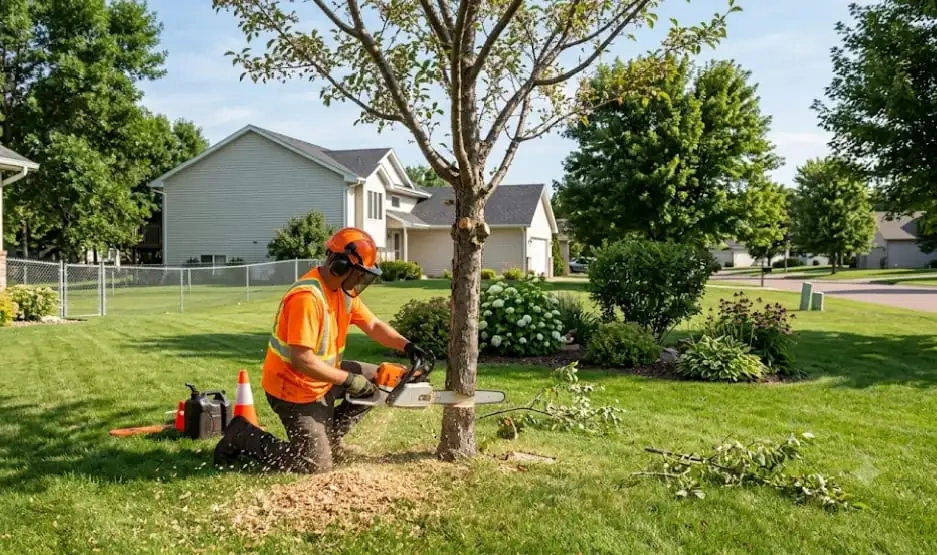
Tree Size and Height
Size is the single biggest pricing factor. Larger trees require more time, more crew members, and more specialized equipment. A 20-foot ornamental tree in an open yard is a fundamentally different project than a 70-foot cottonwood shading half your house. Most contractors price by height tier, and moving from one tier to the next can mean hundreds of dollars of difference.
Trunk Diameter
Height alone does not tell the whole story. A wide-trunked, old-growth bur oak takes significantly longer to cut, section, and haul than a slender young tree of the same height. Dense hardwoods like oak and hackberry also require more wear on equipment, which factors into pricing.
Location and Proximity to Structures
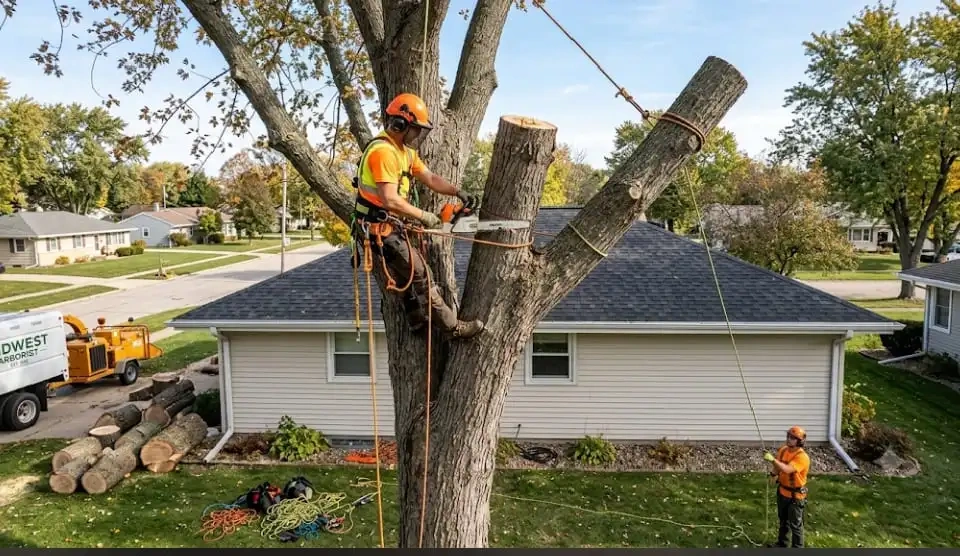
A tree growing in an open backyard is the easiest and cheapest scenario. Trees near your house, a fence, a garage, a driveway, or overhead utility lines require careful sectional removal rather than a simple fell, which adds labor time and risk. Contractors use term “confined space removal” for these situations, and it costs more.
Site Access
If a boom truck or chipper cannot reach the tree easily, crews have to work manually or bring in additional equipment. Narrow gates, steep grades, and landscaping obstacles all reduce access and increase cost. Always mention access limitations when requesting a quote.
Tree Condition
Dead trees are unpredictable. Wood that has begun to rot or that has been compromised by disease can break apart unexpectedly during cutting, creating hazards that require slower, more cautious work. Some contractors add a hazard surcharge for dead or structurally compromised trees. On the other hand, a healthy standing tree that simply needs to be removed is generally a more straightforward job.
Debris Removal and Cleanup
Most quotes include on-site chipping of branches, but log sections and stump grinding are often separate line items. Always confirm exactly what is included. A quote that seems low may not include hauling wood debris or grinding the stump.
Tree Removal Cost by Size in Sioux Falls
| Tree Size | Height | Typical Cost Range | Notes |
| Small tree | Under 25 ft | $200 to $600 | Ornamentals, young maples, shrub trees |
| Medium tree | 25 to 50 ft | $600 to $1,500 | Mature maples, younger oaks, pine trees |
| Large tree | 50 to 75 ft | $1,500 to $3,000 | Cottonwoods, established oaks, large elms |
| Very large tree | Over 75 ft | $3,000 to $5,000+ | Mature cottonwoods, large silver maples |
| Emergency removal | Any size | $1,000 to $5,000+ | Post-storm, after-hours, urgent situations |
| Stump grinding | Per stump | $75 to $300 | Varies by diameter and root density |
| Hazard tree surcharge | Added to base | $150 to $500+ | Dead, leaning, or structurally compromised trees |
For a three-person crew, hourly rates in Sioux Falls typically run between $190 and $240 per hour. Most residential jobs take two to five hours depending on size and complexity.
Common tree species in the Sioux Falls area include bur oak, eastern redcedar, hackberry, cottonwood, silver maple, green ash, and ornamental crabapple. Bur oaks and hackberries tend to be denser and more labor-intensive to remove than cottonwoods or green ash. Keep species in mind when comparing quotes.
Emergency Tree Removal Cost in Sioux Falls
Sioux Falls sits in a region with a well-documented history of severe weather. Straight-line winds, derechos, and spring thunderstorm systems routinely produce wind gusts exceeding 60 to 80 miles per hour in the area, and events like the July 2025 derecho brought hurricane-force gusts that snapped mature trees throughout the Sioux Falls metro area, uprooted established trees citywide, and created thousands of service calls overnight.
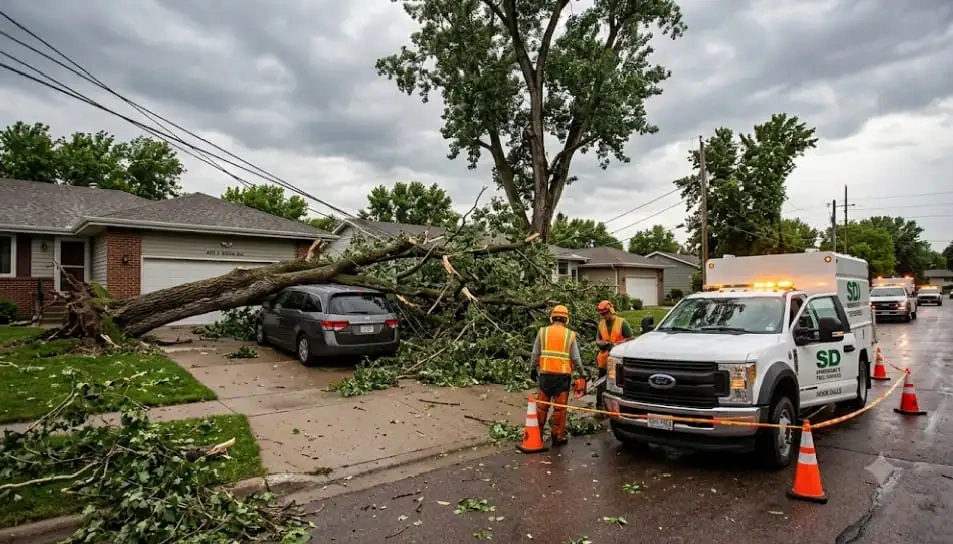
After a major storm, the demand for emergency tree services spikes dramatically. Contractors who were previously available within a day or two are suddenly booked days out. Crews working overnight, on weekends, or in hazardous post-storm conditions charge premium rates. This is not price gouging. It reflects real costs: overtime labor, after-hours crew mobilization, operating under unstable conditions, and coordinating with Xcel Energy when trees are tangled in power lines.
What emergency tree removal typically costs in Sioux Falls:
A medium-sized tree that might cost $800 under normal circumstances can run $1,600 to $2,500 as an emergency job after a storm. Very large trees or situations involving power lines or roof damage can push total costs to $4,000 or more.
One important rule: if a tree has fallen onto your home or a structure, do not have it removed before contacting your homeowner’s insurance company. Removing the tree before an adjuster can document the damage may complicate or reduce your claim. Photograph everything first.
Stump Removal and Stump Grinding Costs
Stump removal is almost always a separate cost from tree removal, and many homeowners are surprised to find it not included in the base quote. There are two primary approaches.
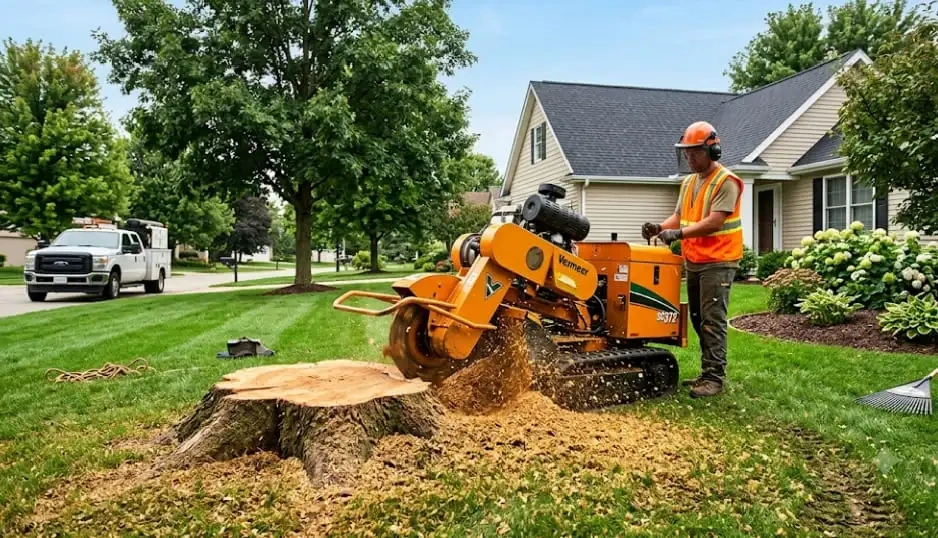
Stump grinding is the standard method. A machine grinds the stump down several inches below the soil surface, leaving wood chips behind. Costs in the Sioux Falls area typically run $75 to $300 per stump depending on diameter. A 24-inch diameter stump will cost more than a 10-inch stump. Discounts are common when you add stump grinding to a removal job on the same day, since the crew and equipment are already on-site.
Full stump extraction involves physically digging out and removing the root ball. This is more expensive, usually $300 to $500 or more for large stumps, and is typically only necessary when you plan to replant in the same spot or need the ground level for construction.
Leaving a stump is not just an eyesore. Rotting stumps attract carpenter ants, wood-boring beetles, and other insects that can eventually find their way toward your home. Old stumps also create tripping hazards and can be a liability if someone falls on your property.
Hazard Tree Removal: When Risk Drives the Price Up
A hazard tree is any tree that poses an elevated risk of failure, whether due to disease, structural defects, root damage, heavy lean, or storm damage. Hazard removals cost more than standard removals for a straightforward reason: they require more careful, slower work and carry higher liability for the crew.
Signs of a hazard tree include:
- A lean that has developed recently or has worsened
- Cracks or splits in the main trunk or major branches
- Visible decay, fungal growth, or hollow sections at the base
- A large portion of dead wood in the upper canopy
- Exposed or heaving roots, which can indicate root rot or wind throw risk
- Branches that have failed previously and been left
If a dead or structurally compromised tree is near your home, garage, or a neighbor’s property, the cost of removal now is always less than the cost of storm damage later.
How Sioux Falls Weather Affects Tree Removal Costs
Sioux Falls has a climate that is particularly hard on trees. Winters bring heavy wet snow and ice accumulation that loads branches beyond their structural limits. Spring arrives with some of the most powerful thunderstorm systems in the country, including derechos, which are long-lived straight-line wind events that can travel hundreds of miles and produce sustained winds that rival weak tornadoes.
These conditions create two specific dynamics for Sioux Falls homeowners:
Seasonal demand spikes. Spring and summer are the busiest seasons for tree removal. After a significant storm event, local contractors can book out several days or more. Homeowners with non-urgent removals who wait until after a storm to call will face both longer waits and higher prices due to demand.
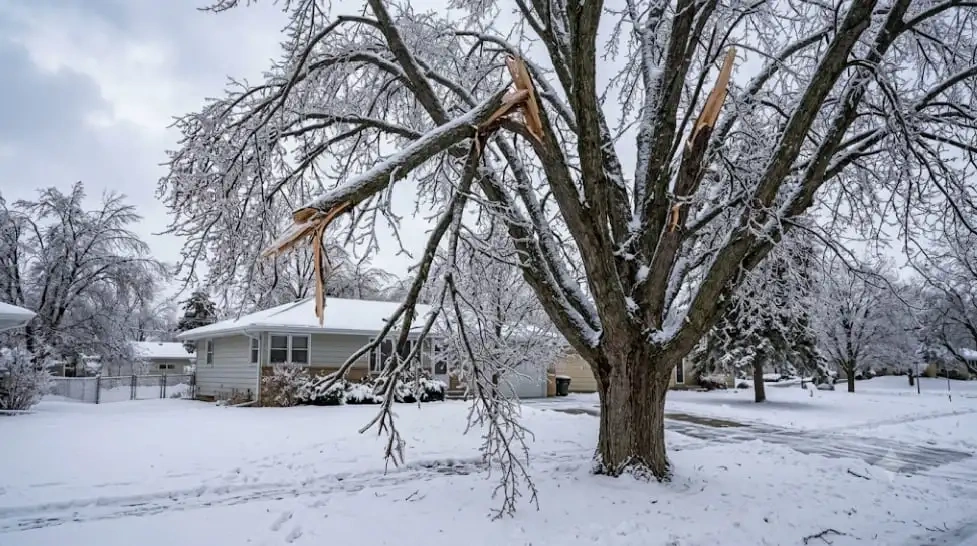
Ice damage in winter. Ice storms cause a specific type of damage where branches, even on otherwise healthy trees, accumulate ice weight that can double or triple the structural load. Branches fail suddenly. Trees that appear healthy in October can be split by February. This creates mid-winter emergency calls, which carry premium pricing because crews work in cold, slippery conditions with shorter daylight hours.
The cost-saving implication: Fall and early winter, before the ice events and well after the storm season, is consistently the least busy period for tree services in this region. Scheduling non-urgent removals in October through December can reduce costs meaningfully compared to peak spring and summer rates.
Does Homeowners Insurance Cover Tree Removal?
This is one of the most common questions homeowners ask after a storm, and the answer depends on specifics.
Insurance typically covers tree removal when:
- A tree falls and damages a covered structure such as your home, garage, fence, or shed
- The damage was caused by a covered peril such as wind or lightning
- You can document the damage before the tree is removed
Insurance typically does not cover tree removal when:
- The tree fell harmlessly in the yard without hitting a structure
- The tree was already dead, diseased, or visibly deteriorating before it fell
- You removed it proactively without a documented emergency
Most standard homeowner’s policies have a separate sub-limit for tree removal that ranges from $500 to $1,500, which may not cover the full cost of a large emergency removal. Read your policy carefully and call your agent before assuming coverage.
If you suspect your insurance may cover the removal, follow this sequence: photograph everything thoroughly, contact your insurance company to report the claim, wait for their guidance before scheduling removal, and get the removal invoice itemized for documentation.
Warning Signs a Tree Should Be Removed
Not every tree that looks bad needs to come down, and not every tree that looks fine is safe. Here are the clearest indicators that a tree has reached the end of its useful life on your property.
Dead or dying crown. If more than half of the tree’s canopy is dead or leafless in the growing season, the tree is likely declining beyond recovery.
Trunk damage. Cracks, vertical splits, missing bark in large sections, or seams where two major trunks join at a sharp angle (called a co-dominant stem) indicate structural weakness.
Fungal growth at the base. Mushrooms or conks growing from the root flare or lower trunk are a reliable indicator of internal decay.
Significant lean. A tree that has developed a noticeable lean, especially toward your home, driveway, or a neighboring property, warrants a professional assessment.
Root damage. Construction, pavement installation, or soil compaction within the drip line of a tree can kill root systems without any visible damage appearing for years. If significant ground work happened near a tree and it started declining afterward, root damage is likely.
History of branch failure. A tree that has dropped large branches in calm conditions, not just in storms, is showing signs of systemic structural weakness.
Common Mistakes Homeowners Make
Waiting until it is an emergency. A tree that is visibly declining will not get better on its own. Removing it proactively during off-peak season costs significantly less than having it fall on your house during a storm.
Hiring on price alone. The lowest quote frequently means the contractor is uninsured, unlicensed, or cutting corners on safety practices. If a contractor is working on or near your property and causes damage without insurance, you may be liable.
Not getting the quote in writing. Verbal quotes are not commitments. A reputable contractor will provide a written estimate that specifies what is and is not included.
Removing the tree before calling insurance. After storm damage, this is a costly mistake. Document first, remove second.
Assuming the stump is included. Always ask explicitly. Most base quotes do not include stump grinding.
DIY removal near power lines. This is genuinely life-threatening. Never attempt to remove or significantly trim a tree that is in contact with or near overhead utility lines. Contact Xcel Energy if lines are involved and hire a qualified professional for any nearby work.
How to Save Money on Tree Removal
Schedule in fall or early winter. Demand drops significantly after storm season ends. Contractors are more available and often more flexible on pricing from October through December.
Bundle multiple jobs. If you have more than one tree to remove or stumps to grind, doing them together reduces the per-unit cost. The crew and equipment are already on-site.
Get three written quotes. Pricing genuinely varies between contractors. Three quotes give you a realistic range and protect you from both overcharging and underqualified low-bidders.
Offer to keep the wood. If your tree is a desirable species and you have firewood needs, some contractors will reduce the hauling fee if you agree to keep the split logs. This saves them time and disposal costs.
Ask about debris disposal. Leaving logs on-site for splitting and arranging to handle your own cleanup of smaller debris can sometimes reduce the base quote.
Do not skip the stump. This sounds counterintuitive, but adding stump grinding to the same appointment is almost always cheaper than scheduling a return visit later. The machine mobilization fee alone often justifies doing it together.
When Not to Remove a Tree
Not every problem tree is a removal job. A qualified arborist can assess whether a tree can be saved through pruning, cabling, or treatment before recommending removal. Trees provide measurable value: studies from the USDA Forest Service indicate that mature trees can add meaningful property value and reduce energy costs through shading and windbreak effects.
Consider alternatives to removal when:
- The tree is otherwise healthy and the issue is limited to dead branches
- The structural problem can be addressed with crown reduction pruning
- The lean is minor, stable, and not directed toward a structure
- A disease has been caught early and treatment is viable
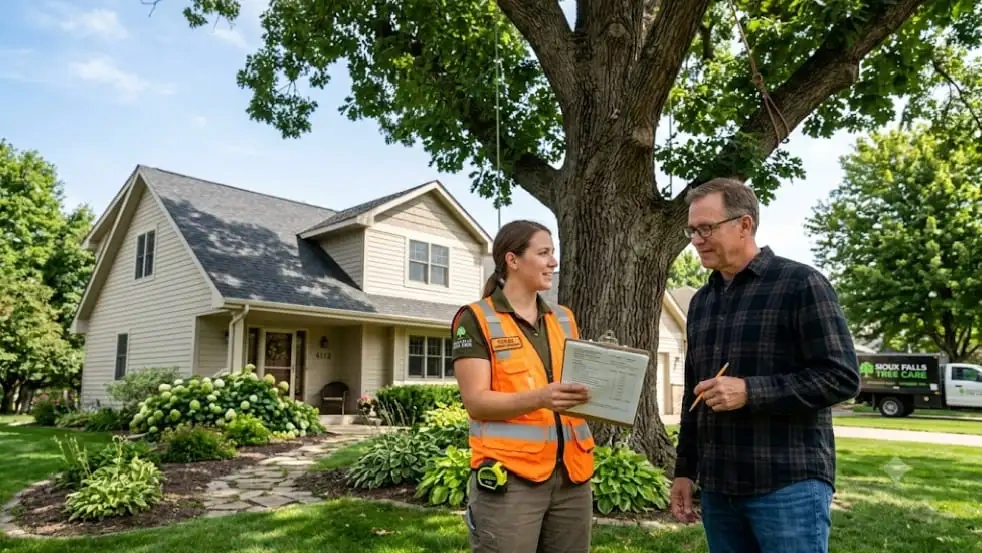
An honest arborist will tell you when a tree can be preserved. If you are getting quotes only from tree removal companies, you are not getting objective advice about preservation.
Frequently Asked Questions
1. What is the average cost of tree removal in Sioux Falls, SD?
Most residential tree removals in Sioux Falls cost between $500 and $1,500. The citywide average based on local project data sits around $1,100. Simple small-tree removals can run under $400, while large or complex jobs routinely exceed $2,000.
2. Does tree size really make that much difference in price?
Yes. It is the single biggest pricing variable. A 20-foot ornamental tree and a 70-foot cottonwood are not in the same category at all. Height, trunk width, and wood density all determine how long a job takes and what equipment is needed.
3. How much does emergency tree removal cost after a storm in Sioux Falls?
Emergency removal in Sioux Falls typically starts around $1,000 and can reach $5,000 or more for large trees or situations involving power lines or roof damage. After major storm events that hit many properties simultaneously, rates rise further due to high demand and after-hours crew deployment.
4. Is stump grinding included in tree removal quotes?
Usually not. Most quotes in the Sioux Falls area price stump grinding separately at $75 to $300 per stump depending on diameter. Ask explicitly, and consider adding it to the same job visit to save on a return-trip fee.
5. Will my homeowners insurance pay for tree removal?
It depends on the situation. If a tree fell due to a covered peril (wind, lightning) and damaged a covered structure, most policies will contribute to removal costs. Trees that fall in the yard without hitting anything are typically not covered. Dead trees that fall are often excluded entirely. Contact your insurer before removing a storm-damaged tree.
6. What time of year is tree removal cheapest in Sioux Falls?
Fall through early winter, roughly October through December, is typically the off-peak period. Storm season is over, spring demand has not started, and contractors are more available. You may have more flexibility on scheduling and potentially on pricing compared to peak summer months.
7. Do I need a permit to remove a tree in Sioux Falls?
Permit requirements depend on local ordinances and whether the tree is on public or private property. South Dakota does not have a statewide tree removal licensing requirement, but Sioux Falls may have local rules, particularly for trees near easements or public right-of-way. Always check with the City of Sioux Falls or consult your contractor before removing any tree near a property line or roadway.
8. How long does tree removal take?
A small tree in an open area may take an experienced crew one to two hours. A large tree near a structure requiring careful sectional removal can take a full day or more. Most residential jobs in Sioux Falls fall in the two-to-five-hour range for a three-person crew.
9. Can I remove a tree myself to save money?
For very small trees away from structures, utilities, and property lines, some homeowners manage it safely. For any tree near overhead power lines, any tree that could reach your home or a neighbor’s property when falling, or any tree over roughly 20 feet, professional removal is strongly advised. The risk of property damage or personal injury in a failed DIY removal is significant and the liability is yours.
10. Why would a dead tree cost more to remove than a living one?
Dead wood loses its predictable structural integrity. It can split, break, or slough off bark unexpectedly during cutting, creating additional hazards for the crew. Contractors often add a hazard surcharge for trees that are dead, diseased, or significantly compromised because the work requires more caution and slower progression.
11. What happens to the wood after removal?
Most contractors chip branches on-site and haul debris away. Log sections are either hauled or left on-site if you request it. If you want firewood from your removed tree, ask your contractor in advance. Some will split and stack it at no additional charge or reduce hauling fees if you take responsibility for the wood.
12. How do I know if I am getting a fair quote?
Get at least three written quotes from insured contractors. If one quote is dramatically lower than the others, ask what it excludes. Extremely low bids often omit stump grinding, debris hauling, or reflect uninsured operators. A fair quote is specific, written, and itemized.
13. Can tree roots damage my foundation or sewer lines?
Yes. Trees planted too close to foundations or sewer lines can cause root intrusion over time. This is a legitimate reason for removal beyond aesthetics or storm risk. Species known for aggressive root systems, such as cottonwood and silver maple, are particularly relevant in this context.
14. What species of trees are common in Sioux Falls and how does that affect cost?
Common species in the Sioux Falls area include bur oak, hackberry, eastern redcedar, cottonwood, silver maple, green ash, and ornamental crabapple. Hardwood species like bur oak and hackberry are denser, take longer to cut, and wear equipment faster, which can push costs toward the higher end of a size tier. Cottonwoods grow very large and are common along drainage areas throughout the city, making them one of the more frequently removed large-tree species.
15. Should I remove a tree that is leaning toward my neighbor’s property?
If the lean is significant, directed toward a structure, and has developed or worsened, yes. In South Dakota, if your tree falls due to your failure to address a known hazard, you may bear liability for any resulting damage. A professional assessment can determine whether the lean is stable and manageable through pruning and cabling, or whether removal is the responsible choice.
What Changes the Price From Town to Town
Access is the single biggest cost factor, and it varies more by location than most people expect. Tight older streets in Lennox usually mean sectional takedowns rather than straight fells. Creek-bank and rock-ledge properties in Garretson need rigging planned in advance. River-corridor ground in Dell Rapids stays soft long after water drops. New-build side yards in Harrisburg and Tea are tight but level. And in Brandon a boulevard ash may not be your bill at all, because the city removes those at no cost to the property owner.