Emamectin benzoate is injected directly into an ash tree’s trunk, where it enters the xylem, the tree’s internal water pipeline, and travels upward with the tree’s natural water flow. When emerald ash borer larvae feed on treated tissue, the compound disrupts their nervous system, causing paralysis and death before they can do meaningful damage. A single injection typically protects a tree for about two years, sometimes longer.
Understanding this mechanism matters because it explains almost everything homeowners get wrong about tree injections, why timing is so specific, why injection beats spraying, and why a treated tree isn’t protected forever from one shot.
Key Takeaways
- Emamectin benzoate kills EAB larvae by disrupting chloride ion channels in their nervous system, causing paralysis rather than acting as a stomach poison.
- Injection puts the insecticide directly into the tree’s xylem, the same pathway water uses to move from roots to canopy.
- A single injection generally protects a tree for about two years, with some research showing up to three years of control.
- Timing is critical: injections work best after spring leaf-out and before EAB eggs hatch, generally mid-May to mid-June in most of EAB’s range.
- Injection is more efficient and has less off-target impact than soil drenches or sprays, because the entire dose stays inside the tree.
- Mammals, including pets, are far less sensitive to this compound’s mechanism than insects are, due to differences in nervous system chemistry.
- Ash trees are wind-pollinated, which meaningfully reduces the pollinator exposure concern compared to flowering, bee-pollinated tree species.
What Emamectin Benzoate Actually Is
Emamectin benzoate isn’t a synthetic chemical built from scratch in a lab. It’s a semisynthetic derivative of avermectin, a compound originally produced by fermenting a naturally occurring soil bacterium, Streptomyces avermitilis. Avermectin itself has been used in various forms for decades in both agriculture and veterinary medicine because of its potency against a narrow range of targets, primarily insects, mites, and related invertebrates.
For ash tree treatment, it’s formulated specifically for trunk injection, most commonly under the trade name TREE-äge, and applied using pressurized injection equipment rather than sprayed onto leaves or drenched into soil.
How It Actually Kills Emerald Ash Borer Larvae
This is the part most articles either oversimplify or skip entirely. Emamectin benzoate doesn’t work like a contact poison or a stomach toxin in the way people usually picture insecticides working. It targets the insect nervous system directly.
Here’s the mechanism in plain terms:
- The larva feeds on treated tissue. As EAB larvae tunnel through the phloem and feed on nutrient-rich tissue, they ingest the insecticide present in the tree’s tissues.
- The compound binds to chloride channels in the larva’s nerve cells. Specifically, it binds to glutamate-gated chloride channels, and to a lesser degree GABA-gated chloride channels, both of which are part of the insect’s nervous system wiring.
- Chloride ions flood into the nerve cells. This binding forces open a channel that normally regulates chloride flow, and the resulting flood of ions overwhelms the nerve cell.
- The nerve cell hyperpolarizes and stops transmitting signals normally. With normal nerve signaling disrupted, the insect loses muscle control.
- Paralysis and death follow. The larva stops feeding almost immediately after exposure and dies shortly after, well before it can complete meaningful feeding damage.
The reason this mechanism is considered relatively safe for use around people and pets comes down to biological differences between insects and mammals. Mammalian nervous systems have much lower binding affinity for this compound at the relevant receptor sites, and the blood-brain barrier in mammals limits how much of the compound can reach the central nervous system in the first place. That combination gives it a wide margin of safety in animal studies, even though the exact same mechanism is lethal to the target insect.
How the Tree Moves the Insecticide: Xylem Transport Explained
To understand why injection timing matters so much, it helps to understand the plumbing system inside a tree.
A tree has two separate transport systems running through its trunk. The phloem, located just under the bark, carries sugars produced in the leaves down to the roots and other tissues. The xylem, located deeper in the wood, carries water and dissolved minerals up from the roots to the canopy. This upward flow is called the transpiration stream, and it’s driven largely by water evaporating from the leaves, which pulls more water up from the roots to replace it.
Trunk injection delivers emamectin benzoate directly into the xylem, not the phloem. Once inside, the compound rides the transpiration stream upward, distributing through the branches and into the canopy along with the tree’s normal water supply. This is also why injections are far more efficient when a tree is actively transpiring: no meaningful water movement means no meaningful insecticide movement.
Practical implications of this transport mechanism:
- Injections need active leaf-out to work. A dormant tree in late fall or winter isn’t moving water through its xylem the way an actively growing tree is in late spring.
- Morning injections generally work better than afternoon ones, since soil moisture tends to be higher and transpiration demand lower earlier in the day, before heat stress kicks in.
- Drought stress slows uptake. A tree under water stress will move less water through its xylem, which means slower and less complete insecticide distribution. Watering a stressed tree before treatment can improve results.
- Full distribution isn’t instant. It generally takes two to four weeks after injection for the compound to spread fully through the tree’s canopy.
The Injection Process, Step by Step
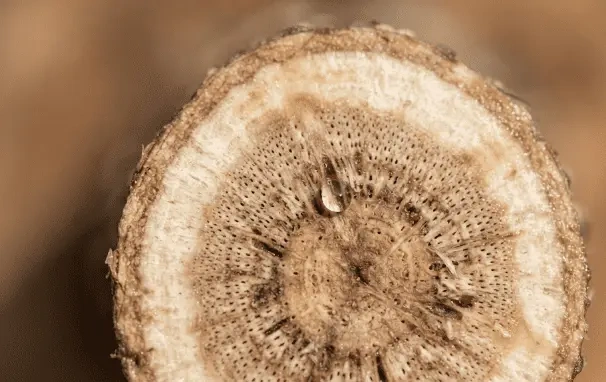
- Site selection. Injection ports are typically placed at the root flare or lower trunk, where xylem tissue is close to the surface and distribution to the rest of the tree is most direct.
- Port creation. Depending on the equipment used, this involves either a small drilled hole or, with certain non-drilling systems, a needle inserted through a sealed port. Drill-based systems remove a small amount of wood tissue to create the injection channel; needle-based systems avoid drilling entirely.
- Product delivery. The insecticide is delivered under pressure into the xylem, either through a syringe-style device or a pressurized reservoir system, with dosage calculated based on the tree’s trunk diameter.
- Uptake period. Over the following two to four weeks, the tree’s transpiration stream carries the compound upward through the trunk and into the branches and canopy.
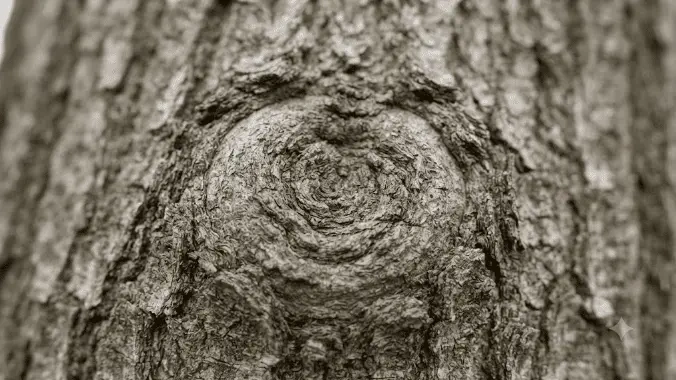
- Wound response. The tree begins compartmentalizing the small injection wound almost immediately. Research on ash trees specifically has shown new wood growth forming over injection sites within the same growing season, meaning a well-placed, properly sized injection wound is not a long-term structural liability for the tree.
Emerald Ash Borer Feeding Cycle and Why Timing Lines Up With It
EAB completes most of its life cycle in one year in this region. Adults emerge and begin laying eggs from late spring into summer, generally peaking from mid-June through early July. Eggs hatch within roughly a week to ten days, and the resulting larvae begin feeding under the bark for the rest of the growing season.
The ideal injection window sits just ahead of this feeding period: after the tree has fully leafed out in spring (so the xylem is actively transporting water) but before eggs have hatched in large numbers (so the insecticide is already present in the tree’s tissue by the time larvae start feeding). In most of EAB’s range, that translates to a window roughly from mid-May to mid-June, though local leaf-out timing should guide the exact start.
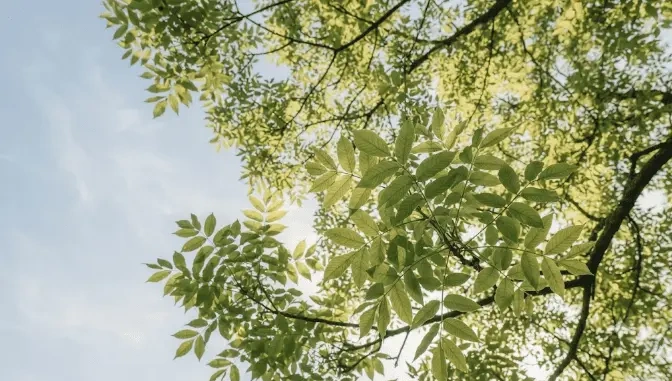
Missing this window doesn’t make treatment useless, but it does reduce the odds that the insecticide is fully distributed before that year’s larvae begin feeding.
How Long Protection Actually Lasts
This is one of the most commonly misunderstood parts of ash tree treatment. A single injection is not a permanent fix, but it also isn’t a one-season fix.
| Research finding | Duration of control |
| Michigan State and Ohio State field studies (high EAB pressure) | At least 2 years from a single injection |
| Multi-year green ash field trial | Up to 3 years from a single injection |
| General industry guidance | Reinjection recommended every 2 years for most residential trees |
The variation between studies comes down to factors like tree size, EAB population pressure in the area, dose used, and how precisely the injection was timed. For a homeowner, the practical takeaway is straightforward: plan on reinjection roughly every two years for as long as you want to keep the tree, rather than assuming a single treatment provides lasting protection.
Why Injection Outperforms Spraying and Soil Drenches
There are three specific reasons trunk injection is generally considered the more effective delivery method for EAB control:
It avoids losses that spraying and soil application both face. A soil drench has to survive being taken up by roots and can be affected by soil type, moisture, and microbial breakdown before it ever reaches the canopy. A foliar spray sits on leaf surfaces where it’s subject to sunlight breakdown, rain washing it off, and drift loss. Trunk injection delivers the full calculated dose straight into the tree’s internal transport system, bypassing both of those loss pathways.
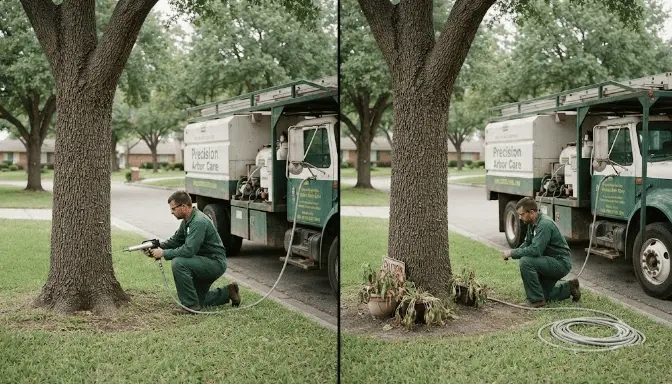
It reduces off-target exposure. Because the product stays contained within the tree rather than being applied to open soil or foliage, there’s less opportunity for it to reach non-target organisms in the surrounding environment, and less applicator exposure during application compared to spraying.
It provides longer-lasting control per application. Where soil-applied products like imidacloprid generally need annual reapplication for reliable EAB control, trunk-injected emamectin benzoate has shown effective control across two to three years from a single application in university trials.
The tradeoffs are real, too: injection requires more specialized equipment and a small wound at the injection site, and it generally costs more per application than a soil drench. For a valuable, otherwise healthy ash tree, most research and industry guidance still favors injection as the more reliable option.
Comparison With Other Treatment Methods
| Method | Application point | Typical duration | Key tradeoff |
| Trunk injection (emamectin benzoate) | Xylem, via drilled or needle port | 2 to 3 years per application | Higher cost, small trunk wound, most reliable control |
| Soil drench/injection (imidacloprid) | Root zone | Generally 1 year | Lower cost, less precise dosing, weather and soil dependent |
| Basal trunk spray (dinotefuran) | Lower trunk bark | Generally 1 year | No drilling required, fast-acting, shorter duration |
| Cover sprays (foliar) | Leaves and bark surface | Weeks, needs repeat applications | Highest drift and off-target exposure risk |
Advantages and Limitations
Advantages:
- Longest per-application protection window among common EAB treatments
- Full dose delivered directly into the tree rather than the surrounding environment
- Strong research support across multiple university field trials
- Works on trees with meaningful existing canopy damage, not just as a preventive measure
Limitations:
- Requires drilling or a needle port, creating a small wound at the injection site each application cycle
- Timing sensitive; works best in a specific spring window tied to leaf-out and local EAB emergence
- Uptake is slower or incomplete in drought-stressed trees
- Not effective as a rescue treatment on trees that have already lost the majority of their canopy, since severely declined trees don’t have enough functioning vascular tissue left to distribute the product
- Requires ongoing reapplication for the life of the tree, not a one-time solution
Common Homeowner Myths
Myth: One injection protects the tree forever.
Reality: Protection generally lasts two to three years per application, and the tree needs reinjection on that schedule for as long as you want to keep it protected.
Myth: Injection timing doesn’t really matter, any time of year works.
Reality: The xylem transport mechanism this treatment depends on only works well when the tree is actively transpiring, which means spring, after leaf-out, is genuinely the most effective window.
Myth: More product means better protection.
Reality: Dosing is calculated based on trunk diameter for a reason. Overdosing doesn’t meaningfully improve control and can increase the risk of tree stress at the injection site.
Myth: Spraying is just as effective and simpler.
Reality: Foliar sprays face drift loss, rain washout, and sunlight breakdown that injected product doesn’t face, which is part of why injection has stronger research support for EAB specifically.
Myth: The drilled injection hole seriously damages the tree.
Reality: Research specifically on ash trees has shown new wood forming over injection wounds within the same growing season, indicating a properly placed, appropriately sized wound is not a significant long-term structural concern.
Safety Considerations
Emamectin benzoate’s mechanism targets receptor types and nervous system chemistry that differ meaningfully between insects and mammals, which is the basis for its favorable mammalian safety profile in animal studies. That said, standard precautions still apply anywhere a pesticide product is used, including keeping people and pets away from the immediate treatment area during application and following all label instructions for the specific product being used.
On the pollinator question specifically, ash trees present a lower practical concern than many other treated tree species. Ash is wind-pollinated, with small, inconspicuous flowers that don’t produce the nectar or attract the pollinator traffic that flowering species like linden or fruit trees do. Research on flowering fruit trees has found that trunk-injected emamectin benzoate residue detection in nectar and pollen can vary by injection timing, but that concern is far less relevant for a wind-pollinated species like ash in the first place.
Environmental Considerations
Because the entire treatment dose is delivered inside the tree rather than applied to open soil or sprayed into the air, trunk injection generally results in less environmental dispersal than either soil drenching or foliar spraying. This containment is one of the more consistently cited environmental advantages of injection-based treatment in the research literature, alongside reduced applicator exposure during the application process itself.
Decision Checklist: Is Injection the Right Call for Your Tree
- Has the tree leafed out for the season? Injection depends on active water transport, so this needs to happen before treatment.
- Is it the right seasonal window? Generally mid-May through mid-June gives the best balance of active transpiration and getting ahead of that year’s egg hatch.
- How much canopy has the tree already lost? Injection works best on trees with moderate or less canopy damage. Severely declined trees may not have enough functioning vascular tissue to distribute the product effectively.
- Is the tree currently drought-stressed? If so, watering before treatment can improve uptake.
- Are you prepared for a recurring treatment schedule? Plan on reinjection roughly every two years for the life of the tree.
Frequently Asked Questions
What is emamectin benzoate?
It’s a semisynthetic insecticide derived from avermectin, a compound originally produced by a naturally occurring soil bacterium. It’s formulated for trunk injection into trees to control wood-boring insects like emerald ash borer.
How do emamectin benzoate injections work?
The insecticide is injected into the tree’s xylem, where it travels upward with the tree’s natural water flow. When EAB larvae feed on treated tissue, the compound disrupts chloride channels in their nervous system, causing paralysis and death.
How long does emamectin benzoate last?
University field studies show a single injection typically provides at least two years of control, with some trials showing effective control for up to three years.
Does emamectin benzoate kill emerald ash borer larvae?
Yes. It’s specifically effective against the larval stage, which is the stage responsible for the vascular tissue damage that kills ash trees.
Is trunk injection better than spraying?
For EAB control specifically, yes, according to most available research. Injection delivers the full dose directly into the tree’s transport system, avoiding the drift, washout, and breakdown losses that foliar sprays face.
When should ash trees receive injections?
Generally after spring leaf-out and before that year’s EAB eggs have hatched, typically a window from mid-May to mid-June in most of the pest’s current range, adjusted for local leaf-out timing.
Is injection safe for pets?
Mammals have significantly lower sensitivity to this compound’s mechanism than insects do, due to differences in nervous system receptor chemistry and the mammalian blood-brain barrier. Standard precautions around any pesticide application still apply.
Is injection safe for children?
The same mammalian safety profile applies, and standard precautions, such as keeping people away from the treatment area during application, are recommended regardless.
Does injection harm pollinators?
Ash trees are wind-pollinated with inconspicuous flowers that don’t attract meaningful pollinator activity, which substantially reduces this concern compared to flowering, insect-pollinated tree species.
Does tree size affect how injections work?
Yes. Dosage is calculated based on trunk diameter, and larger trees may need more than one injection cycle before full protection is established throughout the canopy.
What happens if it rains right after injection?
Since the product is delivered internally rather than applied to the tree’s surface, rain shortly after injection generally doesn’t wash away or dilute the treatment the way it could with a foliar spray.
Do I need to repeat treatment every year?
No. Most research supports a roughly two-year interval between injections for continued protection, not an annual schedule.
How much does treatment cost?
Cost varies based on tree size and local application rates. It’s generally higher per application than soil drench treatments, but the longer protection window per application is part of the cost-benefit tradeoff.
Does South Dakota’s climate affect injection timing?
Yes, in the sense that local spring leaf-out timing determines the start of the treatment window. Cooler springs may push the ideal injection window slightly later than in warmer regions.
Can injection work on a tree that’s already showing canopy damage?
It can, but effectiveness depends on how much canopy has already been lost. Trees with moderate damage still have enough functioning vascular tissue to distribute the insecticide; severely declined trees often don’t.
Some Towns Add a Paperwork Layer
Injection is not just a technical decision. Brandon requires treatment by a licensed applicator, registration with the city for every treatment cycle rather than once, and a visible tag on the tree. Crooks, where EAB was first confirmed in the area back in May 2022, has ash far enough along that injection is often no longer the right call. Lennox, confirmed only in April 2024, is the opposite case and the better candidate for treatment.